
Karuta Card Game Rules – A Detailed Guide To Gameplay And Scoring
Karuta is a traditional Japanese card game that combines memory, quick reflexes, and recognition of classical poetry. The most well-known version is Hyakunin Isshu Karuta, which is based on one hundred famous classical poems. Unlike Western card games that focus on point comparison or forming combinations, Karuta centers on listening, identifying, and touching the correct card faster than your opponent. This combination of reflex and memorization makes Karuta both intellectually demanding and highly competitive. However, to fully understand the rules of Karuta and how winners are determined, beginners must learn the structure of the card set, the poem-reading process, and the method used to decide victory. The article dv88 explains the complete Karuta rules in a clear and comprehensive way.
Overview of Karuta and the Structure of the Card Set
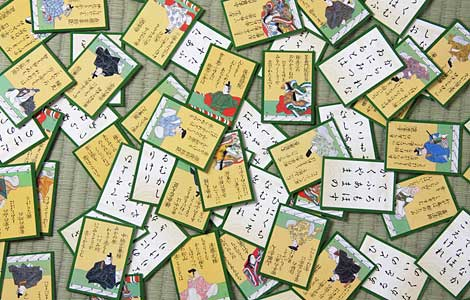
The most popular version of Karuta, Hyakunin Isshu Karuta, consists of one hundred classical poems divided into two types of cards: reading cards (yomifuda) and grabbing cards (torifuda). The reading cards contain the full poem, while the grabbing cards display only the second half of the poem. In a standard match, fifty grabbing cards are placed on the floor between two players, with each player assigned twenty-five cards in their area. The remaining fifty cards are not used during that round. A designated reader recites a poem from a reading card, and players must quickly identify and touch the corresponding grabbing card that matches the second half of the poem.
A defining characteristic of Karuta is that players must memorize all one hundred poems in order to react instantly upon hearing the opening syllables. The game relies almost entirely on memory and speed rather than chance. This dual-card structure and the read-and-touch mechanism define the unique identity of Karuta.
Detailed Karuta Gameplay Rules

Before the match begins, both players are given a limited amount of time to memorize the positions of the cards arranged in front of them. Once memorization time ends, the reader begins reciting poems in random order. As soon as players recognize the opening sounds of a poem, they must quickly locate and touch the corresponding grabbing card.
If a player correctly touches a card located within their own area, that card is removed from play. If the correct card is located in the opponent’s area, the player who touched it removes that card and the opponent must transfer one of their remaining cards to the winner’s side. If a player touches the wrong card, they are penalized by receiving an additional card from their opponent. The game ends when one player successfully removes all the cards from their area, and that player is declared the winner.
Scoring and Determining the Winner
Karuta does not use a numerical scoring system; instead, victory is determined by the number of remaining cards. The objective is to eliminate all cards in your own area before your opponent does. Once a player has no cards left, they immediately win the round. In official tournaments, multiple rounds may be played, and the player who wins more rounds becomes the overall winner.
Correctly touching a card located in the opponent’s area provides a significant advantage because it reduces your own card count while increasing the pressure on your opponent. This rule introduces a strategic element in how players arrange and manage their cards throughout the game. The win condition based on card elimination makes Karuta both strategic and fast-paced.
Key Elements of Karuta Gameplay
Poem Memorization
Since Karuta is based on one hundred classical poems, players must memorize both the content and the opening syllables of each poem. Upon hearing just the first few sounds, they must instantly identify the corresponding card. Memorization is the core factor that determines reaction speed and success.
In professional tournaments, experienced players can recognize a poem after hearing only one or two syllables due to extensive practice.
Reaction Speed and Card-Touch Technique
In addition to memorization, players must develop fast reflexes and precise card-touch techniques. Touching the wrong card results in penalties, so accuracy is just as important as speed. Proper hand control and visual focus are essential to avoid mistakes. Quick reactions without precision can lead to unnecessary penalties and lost advantage.
Card Arrangement Strategy
Before the match begins, each player is allowed to arrange their twenty-five cards according to personal strategy. Some players group cards by similar opening sounds, while others arrange them based on memorization patterns. The arrangement directly affects how quickly a player can identify and reach the correct card.
Optimizing card placement helps reduce hand movement distance and improves response time during gameplay.
Important Notes When Playing Karuta
Karuta is not a game of luck but one that requires long-term memorization and consistent practice. Beginners should start by learning smaller groups of poems instead of attempting to memorize all one hundred at once. It is also important to understand the penalty rules for touching incorrect cards to avoid unnecessary disadvantages.
Practicing hand speed and maintaining intense concentration are crucial for competitive play. Finally, players should thoroughly understand the difference between reading cards and grabbing cards before participating in a match.
Conclusion
Karuta card game rules revolve around listening to a poem being read and quickly touching the corresponding card that contains its second half. With a structure based on one hundred classical poems and a victory condition centered on eliminating all cards in one’s area, Karuta uniquely combines memory, reflexes, and strategic card arrangement. It is a culturally rich game that emphasizes skill rather than chance. Once you clearly understand the rules and winning mechanism, you can explore various gaming experiences within the system and complete the Rút tiền dv88 process when needed.